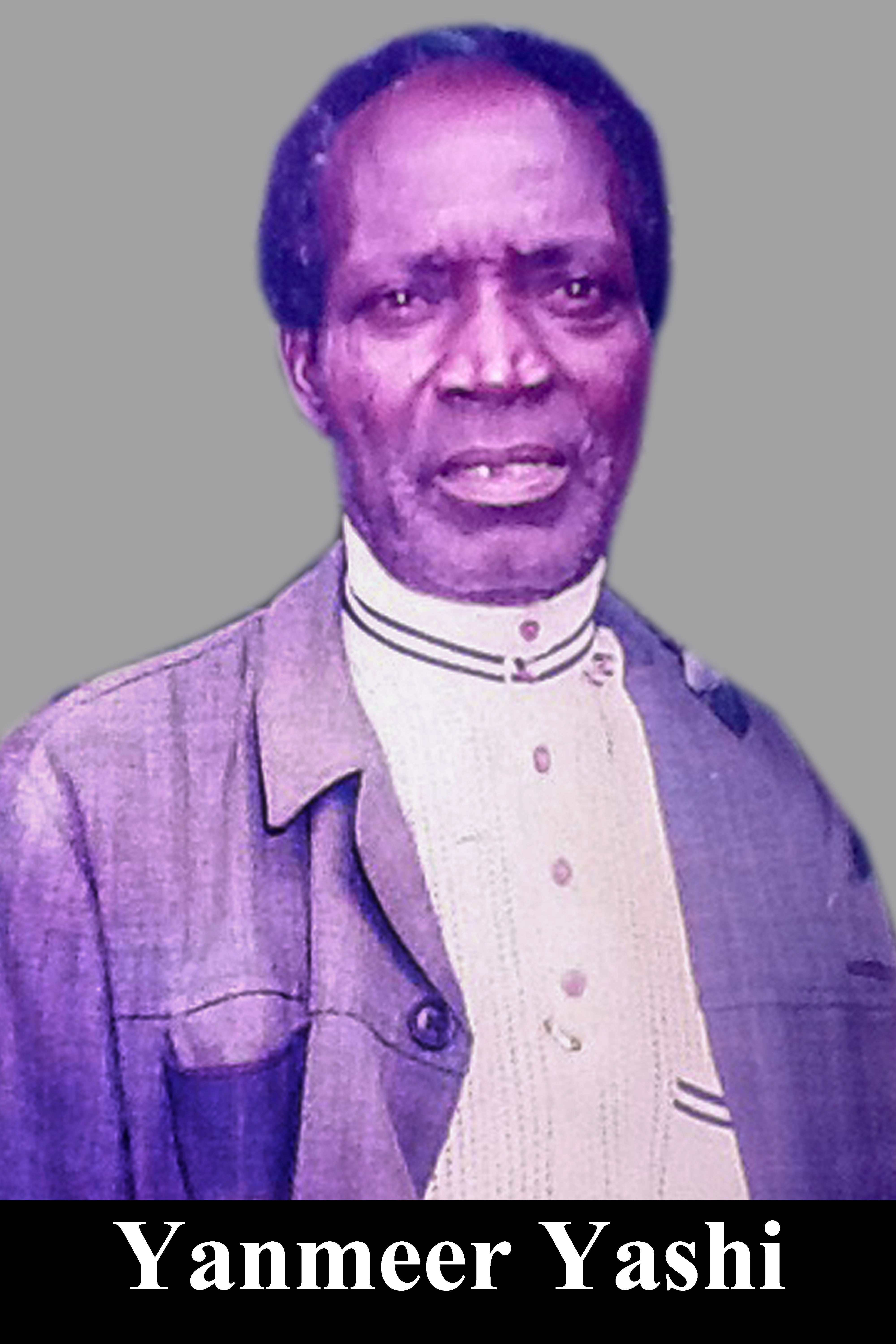
Yanmeer Yashi (died 12 November 1991) was a Tiv folk singer, drummer, composer, and dancer from Benue State, Nigeria. He is widely regarded as one of the pioneering figures and early exponents of Swange (Gbangi) music and dance, a foundational genre in Tiv cultural performance. His music is noted for its sensual rhythms, philosophical reflections, and deep engagement with themes of poverty, loss, fate, and human suffering.
Yanmeer Yashi hailed from Mbaakpoghol, Mbayiôn, in Gboko Local Government Area of Benue State. Little is known about his early childhood, but he reported having no siblings and growing up without extended family support. His life experiences would later strongly influence the tone and themes of his music.
Yashi began singing before the rise of Bam Ginde, the legendary Tiv revolutionary singer. He recalled meeting Bam Ginde in Otukpo, where Ginde worked as a farm labourer among the Idoma people and was also known as a gambler. According to Yashi, Bam Ginde began composing songs later, during his return journey through Taraku.
Unlike many Tiv singers who attributed their musical ability to ritual initiation involving Jiagba (a traditional herbal concoction), Yashi stated that he was never administered any such substance. Instead, he began his musical life by performing songs composed by earlier Tiv singers, including Gbaseela Dajo, Ityô Uge Dagba, and Anche, whom he regarded as his elders and musical forerunners.
Yashi did not initially consider himself a composer. He recounted that one day, around midday, he picked up a drum and began drumming and singing spontaneously. To his surprise, he found himself composing original songs, an experience he described as sudden and unexplained.
Yanmeer Yashi identified his musical style as Gbangi, also known as Swange, a genre associated with rhythmic drumming, dance, and romantic expression. This style was also used by other Tiv performers such as Golozo, Pevkyaa Zegi, and Udoo Mbalagh.
He traced the origins of Gbangi to the Ihyarev lineage, found in present-day Guma, Makurdi, and Gwer West Local Government Areas. According to Yashi, the genre originated from romantic interactions between young men and women during communal activities, particularly the act of helping women lift water basins onto their heads. The resulting closeness inspired flirtatious songs and movements, which evolved into the Gbangi dance form.
Although some listeners regarded the sensual elements in his performances as immoral, cultural scholars and practitioners have identified Gbangi as the foundation of Tiv sensual dance traditions. Yashi was among the most prominent performers of this style, physically performing across major settlements in Tivland and beyond.
Yashi’s songs are characterized by rich use of proverbs, idioms, anecdotes, and moral reflections drawn from Tiv worldview and lived experience. His compositions often stressed:
Poverty and material deprivation
Loneliness and abandonment
Fate and communal responsibility
The inevitability of death
Among the proverbs featured in his songs were:
“Ku ka kpandegh ku Aondo Ter a nger u yô shie kuma u ta” (“Death is a tax God himself requires which all must pay when due”)
“Inyaregh ki been or yo nan been zee” (“Money gets exhausted, but the individual endures”)
His music conveyed deep frustration with social neglect and the absence of support systems, especially the failure of kinship networks traditionally relied upon in Tiv society.
Yanmeer Yashi’s life was marked by extreme hardship. He lost his only wife, who drowned after being attacked by a crocodile, and his only child. He reported having no surviving close relatives willing to support him, stating that some distanced themselves from him on the grounds that he was “from a different mother.”
In Tiv tradition, individuals often seek refuge among their mother’s kin during hardship, but Yashi reported finding no support from either paternal or maternal relations. A soldier and benefactor, Ubugh Akera, who had promised to assist him financially so he could remarry, was killed during the Nigerian Civil War, further deepening Yashi’s despair.
These experiences formed the emotional core of his laments, including songs in which he described himself as utterly helpless and abandoned.
By 1991, Yashi lived alone in a thatched hut in Gboko, which was in an advanced state of disrepair and infested with rats. During a visit in May 1991, it was observed that he hung tubers of yam from the rafters using rope to protect them from rodents.
Despite his poverty, Yashi continued to express stoic acceptance of life and death, often remarking that if he died without burial, vultures would consume his body and eventually return it to the earth.
In addition to lamentation, Yashi’s songs offered moral instruction. He warned against mocking others’ misfortune, asserting that similar calamities could befall those who do so. He also emphasized the inevitability of death, urging listeners to live with humility and empathy.
Yanmeer Yashi died on 12 November 1991 after being struck by a vehicle at Tyeku near Yandev while returning from a walk taken earlier that day. He died at night as a result of the accident.
Yanmeer Yashi is remembered as one of the foundational figures of Swange (Gbangi) music and dance. His life and art embody the fusion of performance, philosophy, and lived experience within Tiv oral tradition. Though he lived and died in poverty, his songs remain important cultural texts that document Tiv values, social structures, and the human condition.
Discover other Tiv artistes preserving our cultural heritage
Do you know a Tiv artiste who should be documented? Help us preserve our oral traditions and musical heritage for future generations.