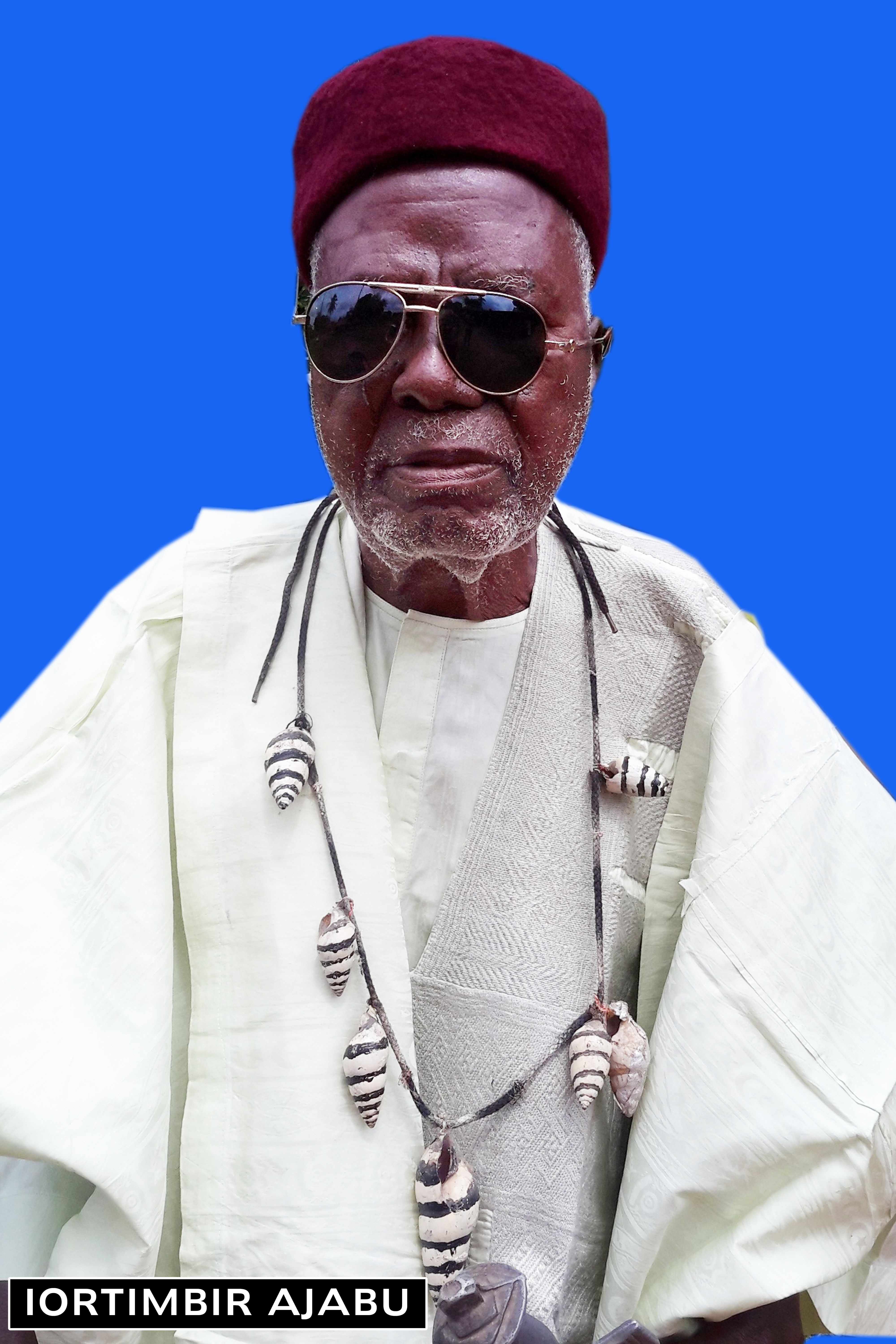
Pa Iortimbir Ajabu (born 1923) is a Tiv traditional composer, singer, and performer from Atirkyese, Mbaagwa in Ushongo Local Government Area of Benue State, Nigeria. He is regarded as one of the oldest surviving practitioners of Tiv oral music and dance traditions, particularly the Ichegher genre. Over a career spanning more than six decades, Ajabu became known for leading a large community-based performance troupe, functioning not only as an entertainer but also as a social commentator and custodian of Tiv cultural heritage.
Ajabu was born in 1923 into the Ajabu family of Mbaagwa. According to his own account, his birth was recorded by his elder brother, Sôngo Ajabu, who had formal education. His father, also a singer, composed songs in the Ange style, suggesting that musical practice formed part of the family’s cultural background. Ajabu began formal schooling at a Native Authority primary school but did not pursue extensive education, later devoting himself to traditional performance.
Ajabu stated that he began his singing career in 1957 after becoming fascinated by a dance form known as Ichegher—a Tiv performance tradition combining music, choreography, and communal participation. Rather than being formally initiated into the art through ritual practices sometimes associated with Tiv musicianship, he maintained that his authority to perform came directly from his community. Elders reportedly convened a meeting and mandated him to continue the musical legacy of his father, granting him lifelong approval to lead the troupe.
Unlike solo performers, Ajabu led a large ensemble drawn from various families within the Mbaagwa community. At its peak, the group comprised more than twenty elderly performers who sang, danced, and played traditional instruments. Ajabu emphasized collective leadership, distributing proceeds from performances among members and taking only what the group allotted to him. This approach contributed to the troupe’s longevity and cohesion.
His performances addressed a wide range of social issues, including moral conduct, community achievements, and public health concerns. Some of his later compositions warned of the dangers of HIV/AIDS, reflecting his role as a cultural communicator. Ajabu’s music has been described as both mystical and reflective of traditional Tiv cosmology, incorporating themes of witchcraft beliefs, fate, and communal values.
On 29 December 2012, Ajabu celebrated 55 years of leading his orchestra-like troupe and his 90th birthday with the launch of a video album titled Ichegher in Lessel, Ushongo Local Government Area. The event attracted community leaders and cultural enthusiasts, highlighting his enduring influence.
Ajabu gained recognition across Tivland for performing at diverse occasions, including weddings, funerals, and political gatherings. His fame brought both honor and modest financial rewards, enabling him to support himself while maintaining cultural traditions.
Although he long identified with traditional beliefs, Ajabu reportedly converted to Christianity in his later years and was baptized around 2019. He explained that the decision was motivated by a desire for spiritual assurance and reunion with loved ones in the afterlife. Following his conversion, he indicated that he would no longer participate in performances he considered worldly.
Despite advancing age and the loss of many troupe members, Ajabu retained a sharp memory and continued to recount his experiences as one of Tivland’s oldest oral poets. His life and work remain significant to scholars and cultural advocates seeking to preserve Tiv musical heritage.
Pa Iortimbir Ajabu is widely regarded as a symbol of community-centered performance traditions in Tiv society. His leadership of a multigenerational troupe, his commitment to collective participation, and his extensive repertoire of socially conscious songs have positioned him as an important figure in the preservation of indigenous oral arts in Benue State and beyond.
Discover other Tiv artistes preserving our cultural heritage
Do you know a Tiv artiste who should be documented? Help us preserve our oral traditions and musical heritage for future generations.